
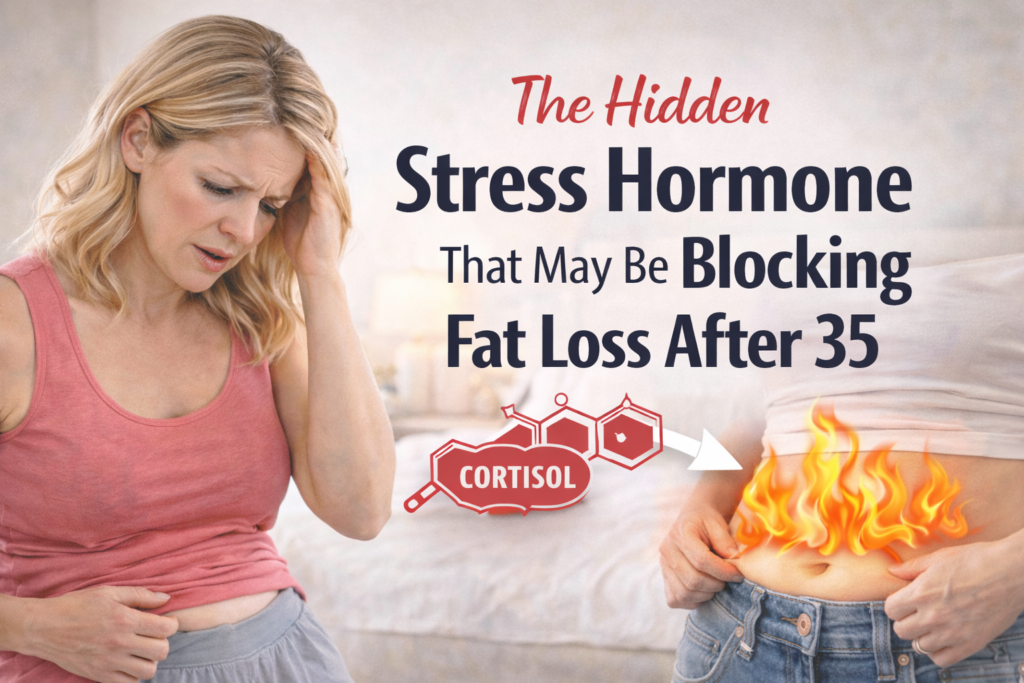
Have you ever felt like your body is working against you?
You eat smaller portions.
You move more than before.
You even cut back on sugar and processed foods.
Yet the scale barely budges.
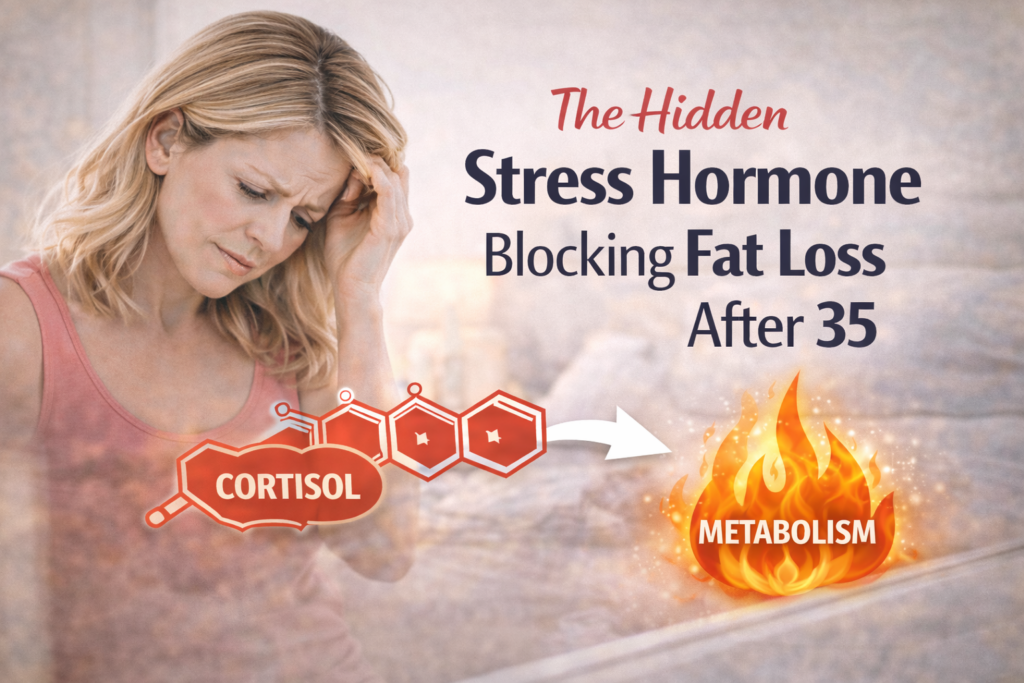
For many women over 35, the missing piece of the puzzle may be a hormone that quietly influences fat storage, energy, and metabolism—cortisol, also known as the stress hormone.
What Is Cortisol and Why Does It Matter?
Cortisol is your body’s natural response to stress.
In small amounts, it helps you stay alert and energized.
It allows your body to respond quickly to short-term challenges.
But in modern life, stress is rarely short-term.
- Deadlines at work
- Long hours managing home and family
- Sleep deprivation
- Constant mental pressure
All these can keep cortisol levels chronically elevated, which may lead to:
- Slower metabolism
- Increased cravings for sugar and carbs
- Greater fat storage—especially around the belly
This is why many women feel frustrated despite healthy eating and consistent exercise.
How Cortisol Directly Affects Fat Loss
When cortisol remains high over time, it signals the body to store energy as fat, particularly in the abdominal region.
It also influences appetite, often triggering cravings at the worst times of the day.
For women juggling work, family, and other responsibilities, this hormonal imbalance can make weight loss feel almost impossible, even with strong discipline and healthy habits.
Natural Ways to Support Hormonal Balance
Understanding cortisol’s role is the first step.
There are natural strategies to help manage its effects, including:
- Improving sleep quality
- Gentle stress-reducing activities (yoga, meditation, breathing exercises)
- Supporting metabolism with natural ingredients and supplements
One approach that many women explore involves natural formulas designed to support metabolism, balance stress hormones, and promote healthy fat burning.
These strategies don’t require extreme dieting or hours at the gym—they work with your body instead of against it.
Continue Reading
Now that you understand how stress hormones and metabolism changes can make fat loss harder, it’s time to discover a natural approach many women are using to support their body and boost metabolism.
👉 Discover the method here:
[https://is.gd/UmNtjL ]