
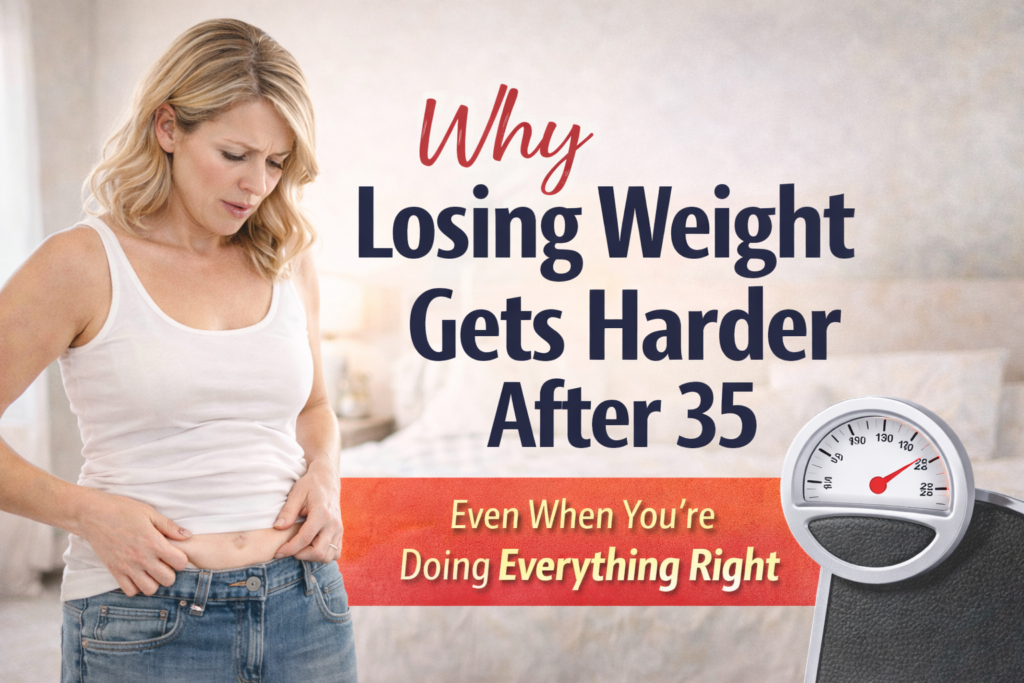
For many women, something changes in their body after their mid-30s.
You start paying more attention to what you eat.
You move more during the day.
You even try to manage stress and sleep better.
Yet somehow… the number on the scale doesn’t reflect your hard work.
If this sounds familiar, you are not alone. Thousands of women across the United States and Europe face the same frustrating reality: losing weight becomes harder, even when they’re doing “everything right.”
When the Change Often Becomes Noticeable
It usually starts subtly:
- A pair of jeans that once fit perfectly now feels snug around the waist.
- Your energy levels dip, even though your routine hasn’t changed much.
- The scale creeps upward, even though you are eating smaller portions.
Many women feel frustrated and confused. They wonder:
“Why am I gaining weight despite eating less and staying active?”
The answer often isn’t about discipline. It’s about what’s happening inside the body—changes that affect metabolism, fat storage, and hormone balance.
Understanding the Metabolism Shift
As women enter their mid-30s, the body begins responding differently to the same lifestyle habits.
- Metabolism may slow down subtly.
- Hormones like cortisol (the stress hormone) can influence fat storage.
- Stress, sleep patterns, and energy balance play a larger role than ever.
This combination can make weight stubbornly stick to areas like the belly, hips, or thighs—even when eating right and exercising regularly.
Why Belly Fat Often Appears First
Belly fat is usually the first place many women notice changes.
This isn’t just about calories. The body tends to store fat in the abdominal region when certain stress-related hormones remain elevated over time.
So even when you’re careful about what you eat, the body may respond in ways that make fat loss feel almost impossible.
There Is Hope — And Natural Ways to Support Your Body
The good news is, understanding the reason behind these changes gives you control.
There are natural strategies to support metabolism, balance hormones, and manage stress. These strategies can make it easier for your body to burn fat efficiently and feel energized again.
Continue Reading
If you’ve ever wondered why your body seems to hold onto fat despite your efforts, the explanation may surprise you.
In the next article, we’ll explore the hidden stress hormone that quietly influences metabolism and fat storage in many women—and natural ways to support your body in response.
👉 Read the full explanation here:
[https://is.gd/XX3Ozo ]